
In B2B, buying journeys have become increasingly complex with decision-makers interacting across multiple digital channels before engaging with a sales team. Traditional account-based marketing (ABM) strategies that depend on limited customer information often struggle to identify buying opportunities, personalize communication, and maintain consistent engagement. To overcome these challenges, businesses are combining first-party and third-party data to develop more intelligent, targeted, and measurable campaigns.
In modern account based marketing b2b strategies, data integration plays a critical role in understanding target accounts, identifying purchase intent, and delivering personalized experiences throughout the buyer journey. By combining insights from existing customer interactions with external behavioral and intent signals, marketers can build a more comprehensive understanding of potential customers and improve campaign performance.
1. Understanding First-Party and Third-Party Data in ABM
Before developing an integrated data strategy, businesses must understand how these two data categories contribute to account identification and engagement.
First-Party Data: Building Insights from Direct Customer Interactions
First-party data refers to information collected directly by an organization through its owned digital platforms and customer interactions. It provides valuable insights into how existing customers and potential buyers interact with a brand.
Common first-party data sources include:
-
Website analytics, page visits, and landing-page interactions.
-
CRM records, customer profiles, and previous sales conversations.
-
Email engagement, webinar registrations, and content downloads.
-
Product usage data, customer feedback, and purchase history.
-
Marketing automation records and campaign engagement metrics.
For ABM campaigns, first-party data helps marketers understand which accounts are actively engaging with their content, what solutions they are exploring, and where they are positioned in the buying journey.
For example, repeated visits to a pricing page, multiple webinar registrations from the same organization, or engagement with product comparison guides may indicate increasing purchase interest.
Third-Party Data: Expanding Account Intelligence
Third-party data is acquired from external providers that collect and aggregate information across multiple websites, platforms, and business sources. It helps marketers identify prospects and understand potential buying activities beyond their owned channels.
Important third-party data sources include:
-
External buyer intent and topic research signals.
-
Firmographic and techno graphic databases.
-
Industry reports and business intelligence platforms.
-
External content consumption and engagement patterns.
-
Company growth, technology adoption, and organizational changes.
While first-party data provides direct engagement insights, third-party data expands audience visibility by identifying potential buyers who may not have interacted with a company’s website or marketing campaigns.
Combining both sources creates a more complete account intelligence framework.
2. Why Combining First-Party and Third-Party Data Matters for ABM
Using either data source independently can create gaps in account targeting. First-party data may provide limited visibility into prospects who have not interacted with a brand, while third-party data may lack the context of direct customer relationships.
Integrating both helps organizations improve account selection, personalization, and campaign timing.
According to Gartner’s 2025 Tech Marketing Benchmarks Survey, technology providers running ABM programs reported pipeline lifts of more than 11% compared with traditional demand generation programs or prospecting. This highlights the commercial potential of structured account-focused strategies.
The 2025 N.Rich State of ABM report also found that 77% of surveyed organizations running ABM reported increased pipeline, while 69% experienced improved engagement within target accounts. However, only 26% described their ABM programs as successful, indicating that execution and data integration remain important challenges.
A combined data approach helps address these challenges through:
-
Improved account identification: External intelligence expands the list of potential accounts, while internal engagement data helps prioritize them.
-
More accurate buyer profiling: Firmographic, techno graphic, and behavioral information creates detailed account profiles.
-
Better personalization: Campaign messaging can reflect both observed interests and direct engagement history.
-
Timely sales engagement: Intent signals combined with CRM activity help identify accounts showing stronger buying readiness.
-
Improved resource allocation: Marketing teams can prioritize accounts with stronger engagement and revenue potential.
3. Building a Unified Account Intelligence Framework
The effectiveness of data-driven ABM depends on how efficiently different data sources are collected, connected, and activated. A unified account intelligence framework helps eliminate disconnected information and creates a consistent view of every target account.
Businesses can establish this framework through the following steps:
Step 1: Define the Ideal Customer Profile (ICP)
Identify target accounts based on industry, company size, annual revenue, geographical presence, technology stack, and growth potential. Establishing a clear ICP ensures that data collection supports specific acquisition objectives.
Step 2: Integrate Multiple Data Sources
Connect CRM platforms, website analytics, marketing automation systems, customer data platforms (CDPs), and external enrichment providers. This creates a centralized account database.
Step 3: Resolve Account Identities
Different stakeholders from the same organization may interact with marketing campaigns through separate devices, email addresses, or digital channels. Account matching and identity resolution help associate these activities with the correct organization.
Step 4: Enrich Account Profiles
Combine internal engagement records with external firmographic, techno graphic, and intent information. This helps sales and marketing teams understand account characteristics, technology requirements, and potential buying priorities.
Step 5: Establish Data Governance
Implement data validation, consent management, access controls, and retention policies. Organizations must ensure that external data is obtained and activated in accordance with applicable privacy regulations.
4. Using Intent Data to Identify High-Value Accounts
Intent data is particularly valuable when combined with first-party and third-party intelligence. It helps marketers identify organizations researching specific products, services, or industry-related solutions.
For example, consider a B2B technology company offering cybersecurity solutions. Its first-party data may reveal that employees from a particular organization have downloaded a cybersecurity whitepaper and attended a webinar.
Third-party intent data may additionally indicate that the same organization is researching endpoint security, threat detection, and cloud security solutions across external platforms.
Combining these signals creates a stronger indication of potential buying interest.
Marketers can use this intelligence to:
-
Prioritize accounts demonstrating multiple buying signals.
-
Identify relevant decision-makers within target organizations.
-
Deliver personalized email and LinkedIn campaigns.
-
Develop account-specific content and webinar strategies.
-
Trigger sales outreach when engagement reaches predefined thresholds.
This approach makes account based marketing b2b campaigns more responsive to actual buyer interests rather than relying exclusively on static account lists.
5. Applying AI and Predictive Analytics to Integrated ABM Data
Artificial intelligence and predictive analytics are making it easier to process large volumes of first-party and third-party information. These technologies can identify behavioral patterns, forecast account engagement, and recommend relevant campaign actions.
According to Demand Gen Report’s 2025 Account-Based Marketing Benchmark Survey, 45% of respondents identified improved personalization at scale as an impact of AI on ABM. Another 34% reported enhanced predictive insights for targeting and prioritization. However, 45% identified integration with existing technology stacks as a major AI adoption challenge.
AI-powered ABM applications include:
-
Predictive account scoring: Ranking target accounts according to conversion potential.
-
Behavioral analysis: Identifying changes in content consumption and engagement patterns.
-
Dynamic personalization: Recommending content based on account interests and buying stages.
-
Campaign optimization: Identifying effective channels, messaging, and engagement opportunities.
-
Sales prioritization: Highlighting accounts that demonstrate increased purchase intent.
The 2026 Inflexion Group ABM Bench-marking Study, based on research involving 40 large enterprises, found that 60% of client-facing teams still lacked a single source of truth for data. It also reported that 63% of programs planned to invest in AI-powered journey orchestration over the following year. These findings reinforce the importance of connecting data infrastructure before scaling intelligent automation.
6. Measuring the Performance of Data-Driven ABM Campaigns
Integrating multiple data sources is only valuable when businesses can measure their impact on pipeline generation and revenue growth. Traditional metrics such as clicks, impressions, and individual lead conversions do not always reflect the effectiveness of account-focused campaigns.
Organizations should establish account-level performance indicators, including:
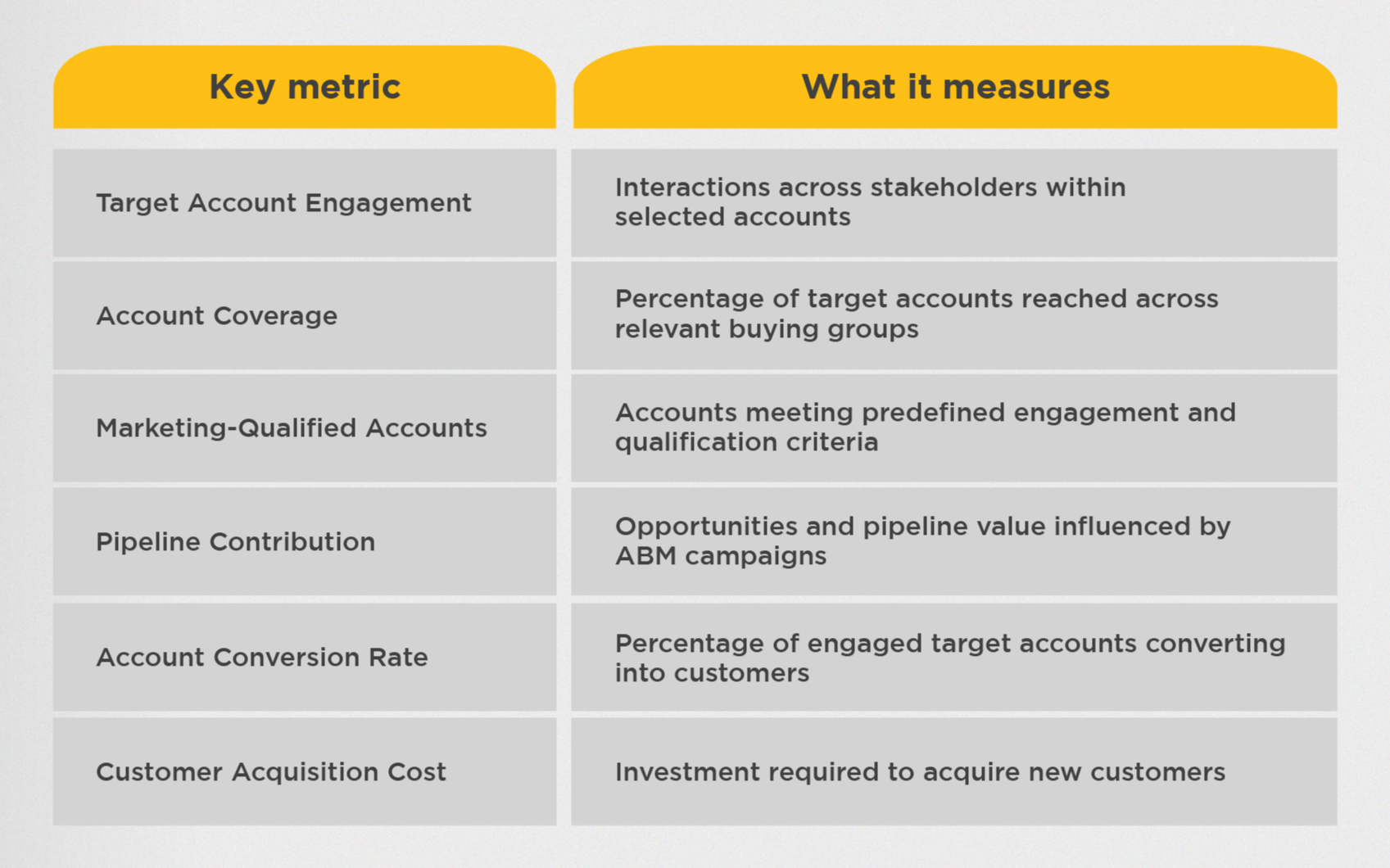
Combining CRM data, campaign analytics, and external intent intelligence helps marketers understand which data sources and engagement strategies contribute to measurable business outcomes.
7. Overcoming Data Privacy and Integration Challenges
Despite its advantages, combining first-party and third-party data introduces operational and compliance challenges. Inconsistent data formats, duplicate account records, outdated contact information, and disconnected marketing platforms can reduce campaign accuracy.
Privacy is another important consideration. Organizations must ensure that data collection, enrichment, storage, and activation comply with applicable regulations, including GDPR and relevant regional data protection laws.
To overcome these challenges, businesses should:
-
Work with reliable third-party data providers that follow transparent collection practices.
-
Regularly validate and update account and contact information.
-
Establish consistent data governance and access controls.
-
Integrate marketing and sales platforms to maintain data accuracy.
-
Use consent-based personalization and appropriate data retention policies.
A well-governed data infrastructure ensures that ABM campaigns remain scalable, relevant, and trustworthy.
Conclusion
The effectiveness of modern ABM depends on how intelligently businesses collect, integrate, and activate customer information. First-party data provides direct insights into prospect interactions, while third-party data expands account visibility and identifies potential buying opportunities beyond owned channels.
Combining these sources with intent intelligence, predictive analytics, and marketing automation enables organizations to identify high-value accounts, personalize engagement, and improve pipeline visibility.
For businesses investing in account based marketing b2b, a unified data strategy is becoming essential for achieving better targeting accuracy and sustainable revenue growth. By connecting reliable data sources with intelligent campaign execution, organizations can move beyond traditional lead generation and build more predictable, account-focused demand generation programs.

Add a Comment